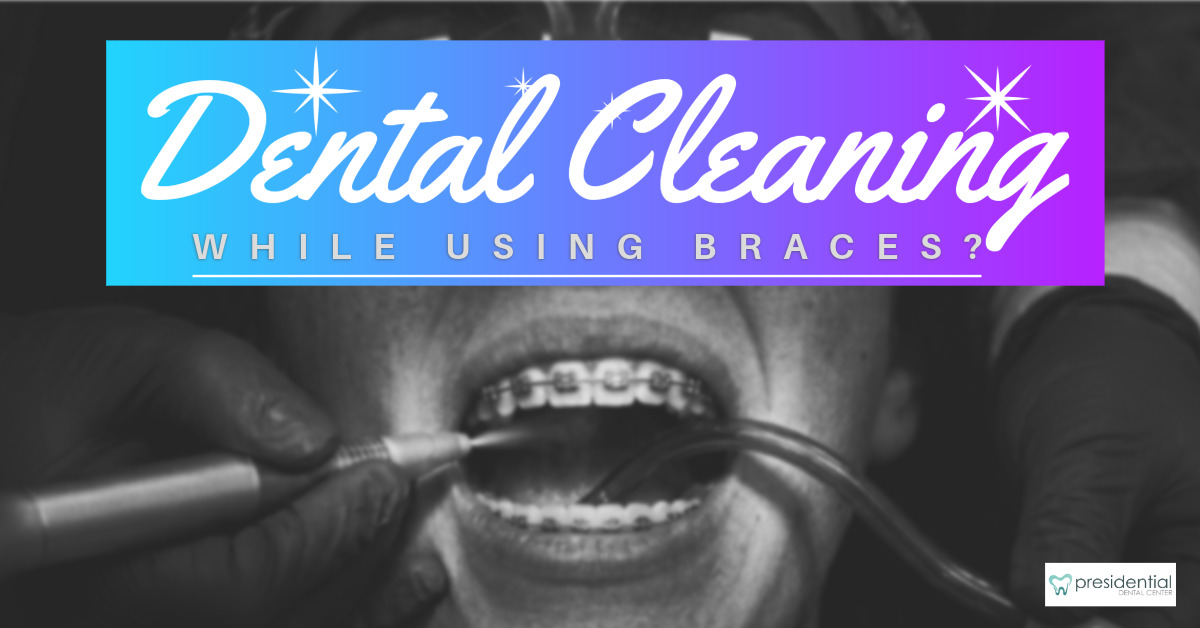
Do You Need Dental Cleanings While in Braces? Yes — Here's Exactly Why
Starting orthodontic treatment is one of the best investments you can make in your long-term oral health. Whether you choose traditional braces or Invisalign clear aligners, you’re committing to a straighter, healthier smile. But here at Presidential Dental Center in West Palm Beach, Dr. Melisande Wolff sees one critical mistake again and again: patients in active orthodontic treatment who don’t realize their dental cleaning schedule needs to change completely. Dental cleanings while in braces — especially in West Palm Beach where patients often juggle busy schedules — are one of the most overlooked parts of successful orthodontic care.
The short answer: yes, you absolutely still need professional cleanings. In fact, you need them more often than before. Here’s why — and what happens to your teeth if you skip them.
Before Braces: Start With a Healthy Foundation
Before any orthodontic treatment begins, your mouth needs to be completely healthy. That means a thorough dental checkup to confirm two things: no active gum disease and no untreated cavities.
Think of it this way — your teeth are the structure and your gums are the foundation. Moving teeth that are sitting in an infected or unstable foundation causes more harm than good. A good orthodontist will require clearance from your dentist before starting treatment. If yours didn’t ask, it’s worth scheduling that checkup now.
Once your mouth is healthy, orthodontic treatment can proceed safely — whether that’s traditional braces or Invisalign clear aligners.
Why You Need an Orthodontic-Friendly Dental Cleaning Every 3 Months
Most people are used to seeing their dentist every 6 months for a cleaning. However, once you’re in braces or aligners, that schedule needs to change. Dr. Wolff recommends professional cleanings every 3 months for all patients in active orthodontic treatment — and here’s the clinical reason why.
Braces Create Hiding Spots for Bacteria
Brackets and wires create dozens of small surfaces where food particles and plaque accumulate. Even the most dedicated brusher cannot reach all of these areas with a toothbrush alone. Over time, that buildup creates the perfect environment for decay — and cavities can develop faster than they would in a mouth without hardware.
Clear Aligners Hug Your Teeth for 22 Hours a Day
Invisalign and other clear aligner systems are worn for 22 hours per day. That means your teeth spend the vast majority of every day wrapped in a plastic tray. If any food debris or bacteria is present on the tooth surface, the aligner holds it there — creating a warm, moist, enclosed environment that accelerates decay significantly.
Both situations — braces and aligners — raise your cavity risk above your normal baseline. That is precisely why the standard 6-month cleaning schedule is not sufficient during orthodontic treatment. The 3-month interval exists to catch problems before they become serious. For more on what’s included in a professional cleaning visit, see our preventive dentistry page.
If You Have a History of Gum Disease: Stay the Course
If you have been managing chronic periodontal disease with cleanings every 3 months — keep that same schedule during orthodontic treatment without exception. In fact, depending on your oral hygiene habits and how your gums respond to treatment, your dentist or periodontist may recommend coming in even more frequently. Our periodontal treatment services are designed to support patients at every stage of gum health.
Periodontal disease is an active condition, not a resolved one. Orthodontic treatment places additional stress on the gum tissue and bone that supports your teeth. Maintaining consistent hygiene maintenance visits is not optional during this time — it is essential to protect everything your orthodontic treatment is trying to achieve.
Your Orthodontist Is Not Your Dentist for Cleanings
This surprises a lot of patients. Your orthodontist manages the movement of your teeth. They adjust your wires, monitor your progress, and guide your bite into alignment. What they do not do is perform orthodontic-friendly dental cleaning visits or check for cavities and gum disease.
That is your general dentist’s role. If your orthodontist has not scheduled any cleanings for you, it is not an oversight on their part — it was never their responsibility. Call your regular dentist and let them know you are in active orthodontic treatment. Ask to be scheduled every 3 months for the duration.
If you don’t have a regular dentist, now is the time to establish care with one. New patients are always welcome at Presidential Dental Center — starting orthodontic treatment without a general dentist in your corner is like building a house without anyone checking the foundation.
Brushing and Flossing Rules During Orthodontic Treatment
Professional cleanings every 3 months are essential — but they work in partnership with what you do at home every day. During orthodontic treatment, your at-home routine needs to be more rigorous than usual.
Brush and Floss After Every Meal and Snack
With braces, food gets trapped easily in brackets and wires. With clear aligners, any food left on your teeth gets sealed under the tray when you put it back in. In both cases, the consequences of skipping are accelerated decay. The standard is to brush and floss after every meal and snack — not just morning and night.
For aligner patients specifically, this is also essential for your treatment to work properly. If food debris is caught between your teeth when you seat your aligner, the tray won’t fit correctly. When aligners don’t seat fully, your teeth don’t track — meaning they don’t move the way they’re supposed to. Every missed cleaning is a potential setback in your treatment timeline.
Wait 30 Minutes After Eating Before You Brush
This surprises most patients — and it’s one of the most important tips Dr. Wolff shares with every orthodontic patient.
Right after eating, your mouth is in an acidic state. Your saliva needs approximately 30 minutes to neutralize that acidity and raise the pH of your oral environment back to a safe level. During that window, your enamel is temporarily softened.
If you brush immediately after eating, you are essentially scrubbing an acidic solution against softened enamel — the hardest material in the human body, but not invincible. Over time, this causes acid erosion, increased tooth sensitivity, and a higher risk of decay. The solution is simple: rinse with water after eating, wait 30 minutes, then brush.
The Best Flossing Tools for Braces — Because Regular Floss Alone Won’t Cut It
Flossing is already the step most people skip. Flossing with braces is harder still — the wire runs across your entire arch, making it impossible to slide regular floss between your teeth the normal way. The good news is that there are tools designed specifically for this situation, and using the right ones makes a real difference.
The Platypus Orthodontic Flosser
The Platypus orthodontic flosser is shaped specifically to slide under the archwire, allowing you to floss between your teeth without threading anything. It’s fast, convenient, and perfect for quick flossing throughout the day — after lunch, after a snack, any time you eat away from home.
That said, the Platypus is best thought of as your daytime tool. It’s efficient but not exhaustive. For a thorough clean, you need something more.
Floss Threader With Regular Floss: The Nightly Standard
Before bed, every night, you need to do a thorough flossing job — not a quick pass. That means using a floss threader: a small, flexible plastic needle that you thread regular floss through, then guide under the archwire and between each pair of teeth, one section at a time.
Yes, it takes longer. Yes, it’s worth it. Food and bacteria left between your teeth overnight — sealed in by brackets and wires — is how tartar builds up and how decay gets started. The few extra minutes at night protect months of orthodontic progress.
The Flaus Electric Flosser: A Game Changer for Braces Patients
If you want to go electric — or if manual dexterity makes it difficult to reach all the way to your back teeth with regular floss — the Flaus electric flosser is an excellent option. Dr. Wolff has used it personally and recommends it enthusiastically for patients in braces.
The Flaus combines the ease of a flosser with a vibrating tip that helps dislodge debris in tight spaces. It’s particularly helpful for patients who struggle with the fine motor coordination required to thread and maneuver floss through brackets and wires. If flossing has felt like a battle, this tool changes the experience entirely.
What to Expect at a Dental Cleaning When You Have Braces
A lot of patients don’t know what a cleaning appointment actually looks like when you have braces. Understanding what to expect makes it easier to show up — and helps you understand why it matters.
First, expect the appointment to take a little longer than a standard cleaning. Braces make it more difficult to remove buildup thoroughly — there is typically more plaque and tartar present on the teeth and beneath the gumline simply because daily cleaning at home is harder. More time is needed to do the job properly.
You may also experience some bleeding, especially if your gums have become inflamed from plaque accumulation around the brackets. Swollen, irritated gums bleed more easily during cleaning. This is not cause for alarm — it is a sign that the cleaning is addressing exactly what it needs to.
The Cleaning Process With Braces
Your oral healthcare provider will typically begin with an air polisher — a device that uses a fine stream of pressurized water and powder to remove the initial layer of soft plaque buildup from the tooth surfaces. This is faster and gentler than scraping and makes the next step more efficient.
After polishing, scalers are used to remove the harder tartar deposits — also called calculus — from the teeth and beneath the gumline. These are the mineralized deposits that cannot be removed by brushing alone, no matter how diligent you are. That is the core reason professional cleanings are irreplaceable, even for the most disciplined patients.
The Wire Removal Tip: How to Get the Best Cleaning Possible
Here is a pro tip that most patients in braces have never been told: schedule your orthodontic wire adjustment and your dental cleaning on the same day, in that order.
Go to your orthodontist first and have your wires removed. Then come directly to your dental cleaning appointment. With the wires out, your oral healthcare provider can access every surface around your brackets without obstruction — resulting in a faster, more thorough, and more comfortable cleaning. After your appointment, return to your orthodontist to have new wires placed.
This simple scheduling strategy gives you the most complete cleaning possible and makes the appointment significantly easier for everyone involved. If you’re in active orthodontic treatment, it’s worth calling both offices to coordinate the timing.
What Happens If You Skip Cleanings During Orthodontic Treatment
The consequences of skipping professional cleanings during braces or aligner treatment are significant — and unfortunately, many patients don’t discover them until it’s too late.
White spot lesions are one of the most common results. These are areas of early enamel demineralization that appear as permanent chalky white marks on the tooth surface. They often develop under and around brackets when plaque is left undisturbed for extended periods. Once they form, they are permanent — meaning the very treatment designed to improve your smile can leave lasting marks on your teeth if your hygiene falls behind.
Beyond white spots, untreated decay during orthodontic treatment can require fillings, crowns, or in serious cases, can compromise the outcome of the orthodontic work entirely. If you’re already noticing tooth sensitivity or pain, don’t wait — our team handles dental emergencies in West Palm Beach and can assess any concerns quickly.
Finishing your treatment with straight teeth that are damaged is not a success.
Frequently Asked Questions (FAQ’s) about Dental Cleanings During Orthodontic Treatment
How often should I get dental cleanings while wearing braces?
Every 3 months — not the standard 6. Braces and aligners significantly increase your risk of plaque buildup, cavities, and gum irritation. The 3-month interval allows your dentist to catch problems before they become serious and keeps your orthodontic treatment on track.
Do I need to see a dentist separately from my orthodontist?
Yes, absolutely. Your orthodontist manages tooth movement — they adjust wires, monitor alignment, and guide your bite. They do not perform hygiene cleanings or check for cavities and gum disease. That is your general dentist’s responsibility. You need both providers during active orthodontic treatment.
Can I get cavities faster with braces or Invisalign?
Yes. Braces create dozens of small spaces where bacteria accumulate and are difficult to clean, and clear aligners hold any food debris or bacteria against your tooth surface for up to 22 hours a day. Both situations raise your cavity risk above your normal baseline — which is precisely why more frequent professional cleanings are essential.
What are white spot lesions and can braces cause them?
White spot lesions are permanent chalky white marks on the tooth surface caused by enamel demineralization. They develop when plaque is left undisturbed around brackets for extended periods. Once they form, they do not go away. Consistent brushing, flossing, and 3-month cleanings are the best prevention.
Should my Invisalign trays be removed before a dental cleaning?
Yes — always remove your aligners before a professional cleaning. Your dental hygienist needs full access to every tooth surface. Similarly, if you wear braces with wires, scheduling your cleaning on the same day as a wire removal appointment (orthodontist first, cleaning second) gives your hygienist the best possible access for a thorough clean.
What's the best way to floss with braces?
Use a combination of tools: the Platypus orthodontic flosser for quick flossing throughout the day, a floss threader with regular floss for a thorough nightly clean, and the Flaus electric flosser if manual dexterity or access to back teeth is a challenge. No single tool does everything — a layered approach gives you the best results.
Is it safe to start braces if I have gum disease?
Not until your gum disease is under control. Moving teeth through infected or inflamed tissue causes more harm than good. If you have a history of periodontal disease, you need clearance from your general dentist or periodontist before beginning orthodontic treatment — and you’ll need to maintain your every-3-month periodontal maintenance schedule throughout. Orthodontic treatment places additional stress on gum tissue and bone, making consistent hygiene visits non-negotiable.
In Braces or Aligners in West Palm Beach? Let’s Keep Your Smile Healthy
At Presidential Dental Center, Dr. Melisande Wolff works with patients in active orthodontic treatment to make sure their oral health stays protected every step of the way. If you’re in braces or Invisalign and haven’t established a 3-month cleaning schedule with a general dentist, now is the time.
Your orthodontist is straightening your teeth. We’re here to make sure those teeth are healthy enough to last a lifetime.
Patients in active orthodontic treatment can call us at 561.686.8580 to schedule a cleaning visit. We’ll note your orthodontic status in your chart from day one and set up the right schedule from the start. Or visit us at presidentialdentalcenter.com to learn more about our preventive dentistry services, new patient experience and our Concierge Dental Service.
Dr. Melisande Wolff